Quantified, then verified
On a recent refurbishment we assessed 599 items for reuse and had the embodied carbon and transport figures externally verified by Net Zero International — roughly half the cost and half the carbon of replacement. At Sky Studios Elstree, 3,507 items reused or reworked avoided 89,910kg of CO2e and kept £450,902 in the budget, on a project that achieved WELL Platinum and BREEAM Excellent with a rule that nothing came from new.
We hold EcoVadis Platinum, which places us in the top 1% of companies assessed. That is awarded for documented, dated, auditable evidence across environment, labour and human rights, ethics and sustainable procurement — not for intent.

Supporting a certification target
For projects working to BREEAM, WELL or a corporate net-zero commitment, we prepare the furniture chapter to be audited: item-level inventories, reuse quantification, material and finish documentation, and the methodology behind every number. We are happy to share the methodology, including with clients who are assessing other suppliers.

What Ska 2.0 asks of the furniture
Ska is the RICS environmental assessment method for non-domestic fit-outs. The Offices Environmental 2.0 scheme changed what furniture has to prove. The previous version asked whether a product had an Environmental Product Declaration. This one reads the figure inside it, and sets embodied carbon limits drawn from the UK Net Zero Carbon Buildings Standard.
Five measures cover furniture: task seating, desks and tables, soft seating, other loose furniture, and the resource management measures dealing with what leaves the building. Each starts the same way. The product has to be designed for disassembly and supplied with a disassembly guide, which rules out glued joints and push-fit fixings.
The published limits include 10.30 kgCO2e per m2 of floor area across task seating, desks and loose furniture, 73 kgCO2e for a fixed-height desk position, 86 kgCO2e for an electric sit-stand, and 58 to 62 kgCO2e for an upholstered meeting chair. Reuse is the route Ska labels Net Zero aligned, and the resource management measure asks for at least half of the existing chairs to be reused directly or returned through a closed-loop scheme, with the remainder kept out of landfill.

What FISP-S certification covers
FISP added an elevated audit in 2025, FISP (S), written to align with the Ska criteria: eco-design, end-of-life strategy, Environmental Product Declarations, and the availability of remanufactured or second-life product. Certificates carrying it are marked with an S. Ska 2.0 names it as a compliance route in each of the furniture measures.
Worth being precise about what that does for a project. The criterion names the company manufacturing the product, so for new furniture the certification that counts is the manufacturer’s, and part of our job is knowing which of them hold it. Where we remanufacture or re-upholster, we are the manufacturer. We have been FISP certified since 2008 and sit on the FISP steering panel.
BREEAM is a different exercise. It assesses fixed furniture, such as built-in desks and kitchen units, under responsible sourcing alongside the rest of the building’s products. Loose furniture largely sits outside it, which is why Ska is where furniture itself gets examined. Sky Studios Elstree reached BREEAM Excellent and WELL Platinum on a rule that nothing came from new.

Wellbeing, where it is more than a word
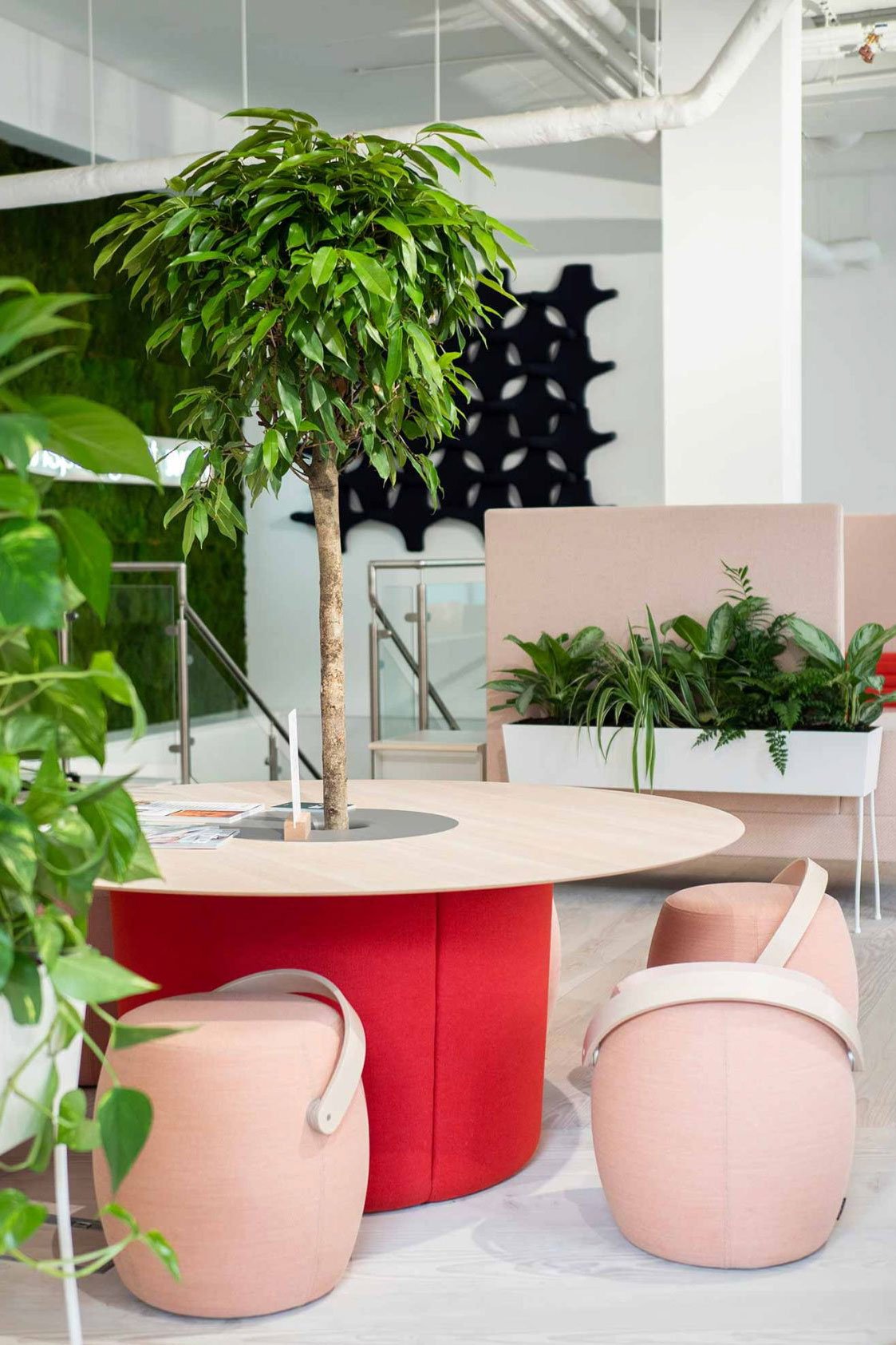
Indoor environmental quality, acoustics, daylight access, material selection and biophilic design all affect whether a space is used. The cheapest interventions are usually the most effective — layout decides who gets the daylight, and that costs nothing. Planting works when someone owns keeping it alive; where that is unrealistic, specifying less of it is the honest answer.

Start with a diagnostic
The process of revamping your workspace is closer than you think. Get in touch using the form below to get started.
Feel free to also browse more using the buttons below