
Life Sciences and Biotech Workspace Planning
Bespoke workspace solutions for the Life Sciences
We can create custom-designed spaces to support whatever you require from your workspace, including:
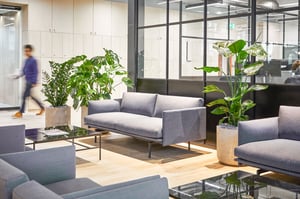
- Agile working spaces, with a range of open plan areas, quiet zones, meeting rooms and breakout areas designed to support different tasks and activities
- Staff welfare areas with comfortable seating
- Quiet study zones
- Research project spaces
- Private, soundproof patient/clinician meeting zones
Sustainable life sciences workspaces
The life sciences sector is at the forefront of developing new solutions to some of the world's most pressing challenges. Alongside this comes the opportunity to make a significant contribution to sustainability.
At JPA Workspaces, we are committed to creating sustainable workspaces, carefully designed to meet both current and future needs. With an award-winning approach to sustainability we can help life sciences organisations to reduce their carbon footprint, reducing waste and disposing of furniture and seating, once it reaches the end of its useful life. We provide support for Ska Rating, BREEAM, LEED and WELLBuilding Standard certification.
If you are an organisation in the biosciences, biotechnologies, therapeutics, pharmaceuticals sectors, our award-winning team can help you to create a more sustainable workplace.

Case study: Advent Bio
Advent Bio is a Contract Development & Manufacturing Organisation based in Cambridgeshire, developing cell and gene therapy solutions. With the UK cell and gene therapy industry expanding at a rapid rate, cleanroom space has increased annually to a current total of 7819 square metres in the past 5 years.

Case study: UCL Life and Medical Sciences
UCL Life and Medical Sciences is home to one of the largest and most prestigious groupings of academics in biomedical, life and population health sciences. The Faculty of Life Sciences at UCL comprises five key divisions, Biosciences, School of Pharmacy, Laboratory for Molecular Cell Biology, Gatsby Computational Neuroscience Unit and the Sainsbury Wellcome Centre.
We provided furniture, fittings and services for a range of academic, agile, learning and collaboration spaces within the faculty.

Life sciences workspace questions
Frequently asked
What is different about furnishing a life sciences workspace?
Three things, mostly. Surfaces and seating have to be cleanable and often specified to a sterile standard. Write-up areas sit immediately alongside laboratories, so they need to work as focused workspace within a few metres of lab activity. And ergonomic compliance matters more than in a standard office, because people are at benches and screens for long periods.
Can furniture be reused in a laboratory environment?
Office, write-up and breakout furniture usually can, and often should. Lab-specific items rarely can, because contamination history and cleaning standards rule it out. We audit first and tell you which is which rather than assuming either way.
Which certifications can you support?
SKA Rating, BREEAM, LEED and the WELL Building Standard. We supply the evidence rather than the certification itself — item-level documentation, embodied carbon figures and waste transfer notes your assessor can use.
How do you handle write-up areas next to laboratories?
As workspace rather than as lab furniture. They need acoustic separation from equipment, somewhere to take a call, and enough enclosure to concentrate. The most common mistake is treating them as an extension of the bench.
Do you work alongside our laboratory fit-out contractor?
Yes, and usually as part of your professional team rather than as a separate supplier. We coordinate with the lab contractor, the M&E team and the architect so the furniture programme fits the works programme. Where minor building works are needed on the office side, we manage those trades too, so you have one contract and one number to ring.
How early should we involve you?
Before the layout is fixed. Furniture is usually specified from a drawing that is already final, which is how a write-up area ends up too small or a breakout space unusable. Involved earlier, we can tell you what the space will actually support.
Explore more: Commercial workspaces · Space planning · Office refurbishment · Sustainable workspaces